
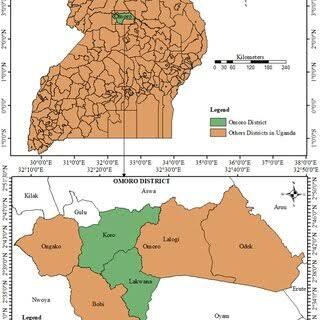
Heritage Foster Initiative Uganda is rooted in the heart of Northern Uganda, with its official base in Bobi Trading Centre, Bobi Sub-county, Omoro District. From this central location, the organization reaches out to some of the most underserved, hard-to-reach, and vulnerable communities—bringing hope, services, and opportunities to those who need them most.
Our work is grounded in the realities of the communities we serve. We do not operate from a distance; instead, we are embedded within the community—listening, learning, and responding to real needs. This deep connection allows us to design programs that are relevant, impactful, and sustainable.
Our Geographic Focus
Bobi Sub-county – Our Home and Foundation
Bobi Sub-county is the operational hub of Heritage Foster Initiative Uganda. Located within Omoro District, this area is predominantly rural, with communities that rely heavily on subsistence farming and small-scale trade.
Despite its rich cultural heritage and strong community ties, Bobi faces significant challenges:
By situating our headquarters in Bobi Trading Centre, we ensure that our work is directly connected to the people we serve. This proximity enables us to respond quickly to emerging needs and maintain strong relationships with community members, local leaders, and service providers.
Omoro District – Expanding Our Reach
While Bobi Sub-county is our base, our programs extend across Omoro District, reaching multiple villages and communities that often lack access to essential services.
Omoro District, like many parts of Northern Uganda, continues to recover from the long-term effects of past conflicts. Many families are still rebuilding their lives, and basic services remain limited in rural areas.
Communities in Omoro face:
Heritage Foster Initiative Uganda works across these communities to bridge gaps in service delivery and ensure that no one is left behind.
Reaching Hard-to-Reach Communities
A defining feature of our work is our commitment to hard-to-reach and underserved populations.
Many of the communities we serve are located in remote areas with:
In such areas, even basic services like healthcare and education become difficult to access. Mothers walk long distances to reach health facilities. Children miss school due to illness or lack of support. Vulnerable individuals remain unseen and unsupported.
Heritage Foster Initiative Uganda takes services directly to these communities through:
By bringing services closer to the people, we remove barriers and ensure that even the most isolated individuals can access support.
The People We Serve
At the center of our work are the people—particularly those who are most vulnerable and often overlooked.
Vulnerable Children
Children are among the most affected by poverty, lack of access to healthcare, and limited educational opportunities.
Many children in the communities we serve face:
We prioritize these children by providing:
Life skills and health education
Our goal is to ensure that every child has the opportunity to grow, learn, and thrive in a safe and supportive environment.
Women and Girls
Women and girls play a central role in families and communities, yet they often face significant challenges, including:
Economic vulnerability
Heritage Foster Initiative Uganda works to empower women and girls by:
By investing in women and girls, we strengthen families and create more resilient communities.
Persons with Disabilities
Persons with disabilities, including children with conditions such as Down syndrome, are among the most marginalized groups in our communities.
They often face:
Heritage Foster Initiative Uganda is committed to inclusion and dignity for all by:
We believe that every person, regardless of ability, has value and potential.
Community Engagement and Participation
Our work is built on strong community engagement. We believe that sustainable change can only happen when communities are actively involved.
We work closely with:
Through this collaboration, we ensure that:
In the areas where we work, many schools face challenges such as:
Heritage Foster Initiative Uganda uses schools as centers for:
By working within schools, we create a ripple effect—impacting not just students but entire communities.
Addressing Systemic Challenges
The communities we serve are affected by broader systemic challenges, including poverty, limited infrastructure, and inadequate public services.
Heritage Foster Initiative Uganda works to address these challenges by:
Our goal is not only to provide immediate support but also to contribute to long-term development.
A Growing Reach
While our roots remain in Bobi Sub-county and Omoro District, our vision extends beyond these areas.
As our capacity grows, we aim to:
Why Our Location Matters
Being based in Bobi Trading Centre is more than a logistical decision—it is a strategic and meaningful choice.
It allows us to:
Our presence in the community is a constant reminder that we are part of the solution—not outsiders, but partners in development.
Stories from the Field
Our Commitment
Heritage Foster Initiative Uganda remains committed to serving the most vulnerable, no matter how remote or challenging the environment.
We are guided by the belief that:
Join Us in Making a Difference
The need in the communities we serve is great—but so is the opportunity for impact.
We invite partners, donors, and supporters to join us in: